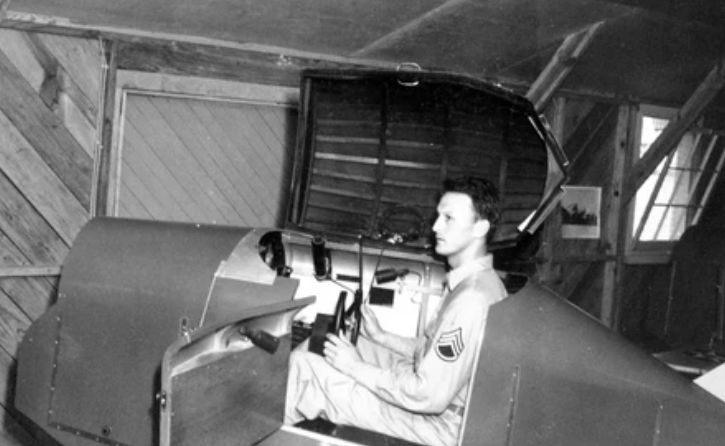
The evolution of simulation technology reflects significant advancements in computing power and methodologies. Early models served as rudimentary tools, but as technology progressed, so did the complexity and realism of simulations. This transformation has led to widespread applications in fields such as healthcare and military training. However, as emerging technologies like artificial intelligence and virtual reality continue to evolve, the implications for future simulations remain vast and intriguing. What new possibilities might await?
The Origins of Simulation Technology
Although simulation technology has seen remarkable advancements in recent decades, its origins can be traced back to ancient practices where rudimentary models served as tools for understanding complex systems.
Historical milestones include the use of simple maps and models in navigation and military strategy, laying groundwork for modern virtual reality.
These early endeavors reflect humanity’s innate desire to explore and comprehend the world.
See also: Technology and the Connected Lifestyle
The Rise of Computer-Based Simulations
The emergence of computer-based simulations marks a significant turning point in the evolution of simulation technology, transforming how complex systems are analyzed and understood.
These simulations create immersive virtual environments, fostering interactive learning experiences that enhance comprehension and engagement.
Applications Across Diverse Fields
As technology advances, the applications of computer-based simulations have proliferated across diverse fields, revolutionizing practices in industries such as healthcare, education, engineering, and environmental science.
In healthcare training, realistic virtual environments enhance skill acquisition, while military strategy benefits from scenario-based simulations.
Architectural design leverages simulations to visualize structures, fostering creativity and innovation.
These applications illustrate the transformative power of simulation technology across various sectors.
The Future of Simulation and Emerging Technologies
Emerging technologies are poised to redefine the landscape of simulation, enhancing its capabilities and broadening its applications.
Virtual reality and augmented reality will foster immersive experiences, while machine learning will enable predictive modeling.
Coupled with real-time analytics, these innovations promise to transform simulations into dynamic tools, empowering users with unprecedented insights and fostering greater creativity and freedom in problem-solving across various domains.
Conclusion
In conclusion, the meteoric rise of simulation technology has not merely revolutionized industries; it has catapulted humanity into an era where reality itself seems quaint and outdated. As virtual and augmented realities meld seamlessly with machine learning, the boundaries of possibility are obliterated, propelling us into realms previously confined to science fiction. The future promises simulations so immersive that one might question whether life itself is just another layer of intricate programming, forever reshaping our understanding of existence.